
Breast cancer education for patients — and the healthcare professionals who care for them.
Learn on your own. Explore together during a treatment session. Share trusted resources with someone you care for.
Healthy Emotions
Just about everyone will be anxious about upcoming medical treatments for their breast cancer. Frequently, my patients tell me that during treatment, they simply put their heads down and push through whatever care is needed to beat or control their cancer. During that timeframe, they never cried, but they also rarely laughed. They never grieved the life that they thought they would be living before their diagnosis, but they also stopped experiencing the joys of their lives.

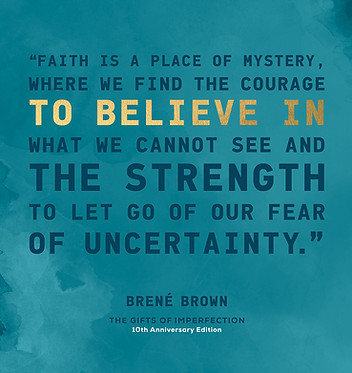
Instead of risking feeling fear and uncertainty, they completely shut themselves down to feeling anything at all. My hope for you is that you choose bravery over inaction — that you allow yourself to feel the hard emotions, even when it is uncomfortable or feels like it will take more energy than you have. If you can do that, you’ll also open yourself up to feeling love, gratitude, joy, and delight — all the best parts of life, and the very reasons to keep on fighting.

The Stages of Grief
Going through a breast cancer diagnosis and treatment is never easy. Medical imaging, bloodwork, genetic tests, biopsies, surgeries, radiation, chemotherapy, hormone-blocking medications, and immunotherapy can feel endless. At times, the path forward isn’t a straight one, leaving you to make difficult decisions about which treatments to pursue and which to forgo.

Worden's 4 Basic Tasks in Adapting to Loss

Worden’s model feels more like a "to-do list" for the soul rather than a timeline you have to follow. It’s less about waiting for a stage to pass and more about the active work you are doing to heal. Unlike models that follow a set order, this approach suggests there are four "tasks" we naturally work on. You might jump between them, tackle two at once, or leave one and come back to it later. It’s a flexible way of looking at how we process a diagnosis or a major life change.

Bowlby and Parkes' 4 Phases of Grief

Bowlby and Parkes proposed a reformulated theory of grief in the 1980s. Their work is based on Kubler-Ross's model and describes 4 phases of grief. It emphasizes that the grieving process is not linear.

The Kubler-Ross Model:
The 5 Stages of Grief
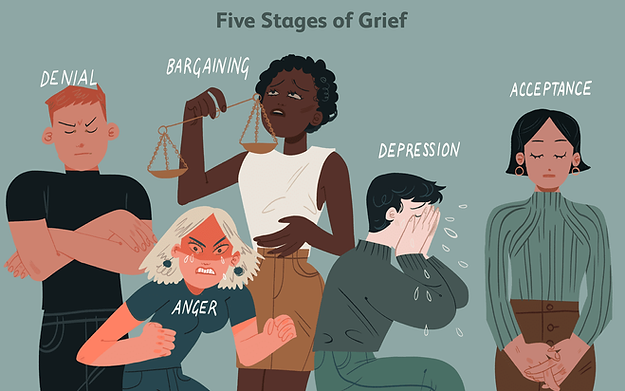
In general, people don’t always move through these stages of grief in order, and you may not experience every stage. It often depends on your own situation and what you are going through.